To book: Small group tour, from $63 per person. Check dates Tour details
Many versions of Pompeii’s history circulate, some closer to cinema than to the excavations. Here we stick to the Wikipedia entries on Pompeii, the excavations and the AD 79 eruption, cited in the text when they add something.
Where sources present a hypothesis, we say so. Where we have no source, such as the number of survivors, we do not give numbers.
The answer in brief
Pompeii was born in the 8th century BC from five villages founded by the Oscans, came under Greek and Etruscan influence and after 89 BC became a Roman colony. The AD 79 eruption of Vesuvius lasted two days: the rain of pumice allowed most inhabitants to flee, and about 1,150 bodies have been found on the site. The excavations began in 1748.
What is the brief history of Pompeii?
An Oscan settlement from the 8th century BC, then a city under Greek and Etruscan influence, then a Roman colony, buried by Vesuvius in AD 79.
The Oscans, a people from central Italy, founded five villages in the area. In the 6th century BC, Greek influence left the Doric Temple. Pompeii rebelled against Rome in the Social War: in 89 BC, Sulla besieged it and, after its surrender, the city became a Roman colony under the name of Colonia Cornelia Veneria Pompeianorum, as reported by English Wikipedia. Venus was the city's protective deity.
What does Pompeii mean and what was it called before?
According to scholar Theodor Kraus, the name would come from the Oscan word pompe, «five»: five villages, or the gens Pompeia. This is a hypothesis.
In Latin, Pompeii is a plural noun. After the Roman conquest, the city took the official name of Colonia Cornelia Veneria Pompeianorum. The name of Pompeii before the Oscans is not documented in the sources we use.
What language was spoken in Pompeii?
Before the Roman conquest, Oscan was also spoken, of which a inscription remains on a city gate; after 89 BC, the main language became Latin.
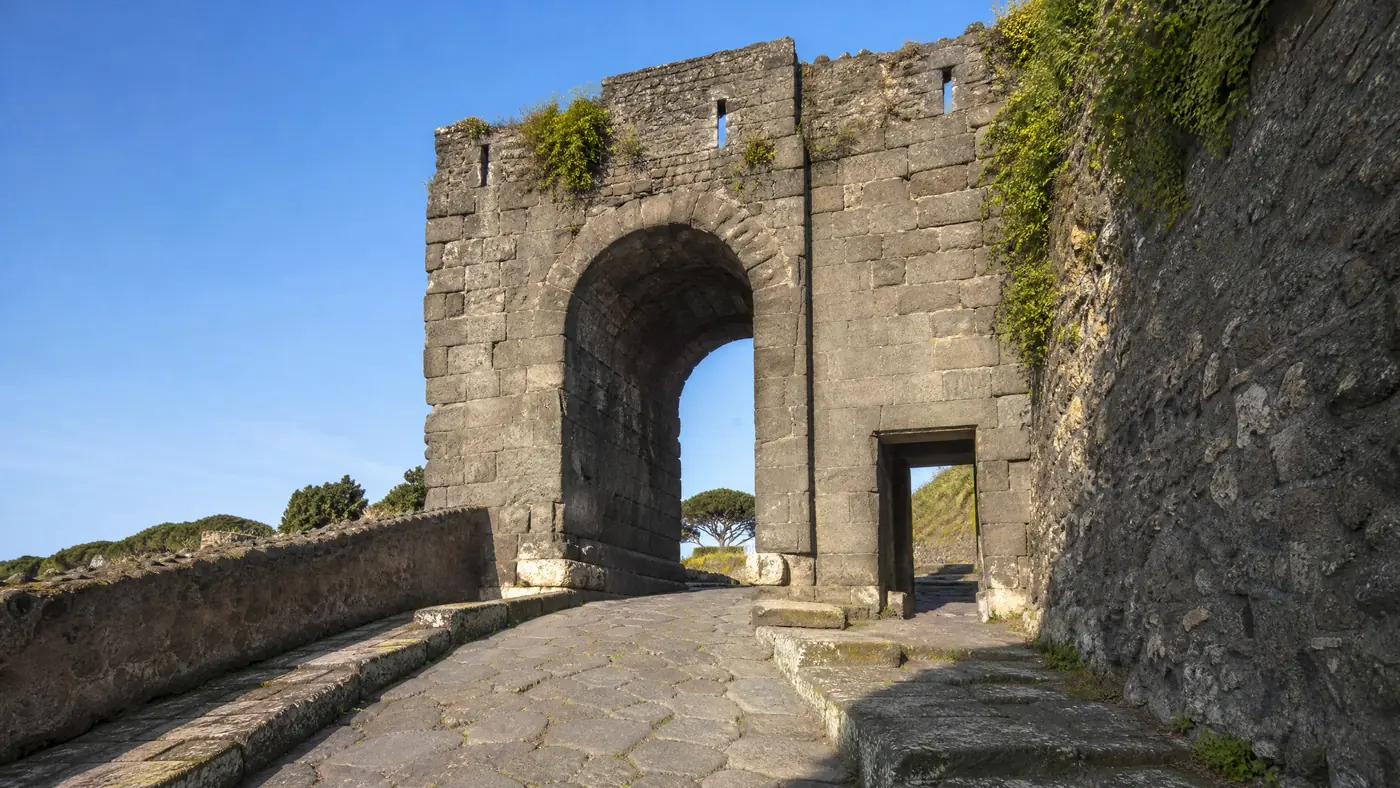
According to Wikipedia, Porta Nola, built around the 3rd century BC, bears an inscription in the Oscan language. After the conquest, many aristocratic families Latinised their names. The numerous graffiti on the walls are today a valuable source on everyday spoken Latin, different from that of classical writers (English Wikipedia).
Was there a sea at Pompeii?
Yes, closer than today. The city stood on a lava plateau about 40 metres above sea level, and the navigable mouth of the Sarno served as its port.
The current coastline is further away: eruption maps show the modern coastline. According to English Wikipedia, the pyroclastic flows of AD 79 altered the landscape, including the coastline.
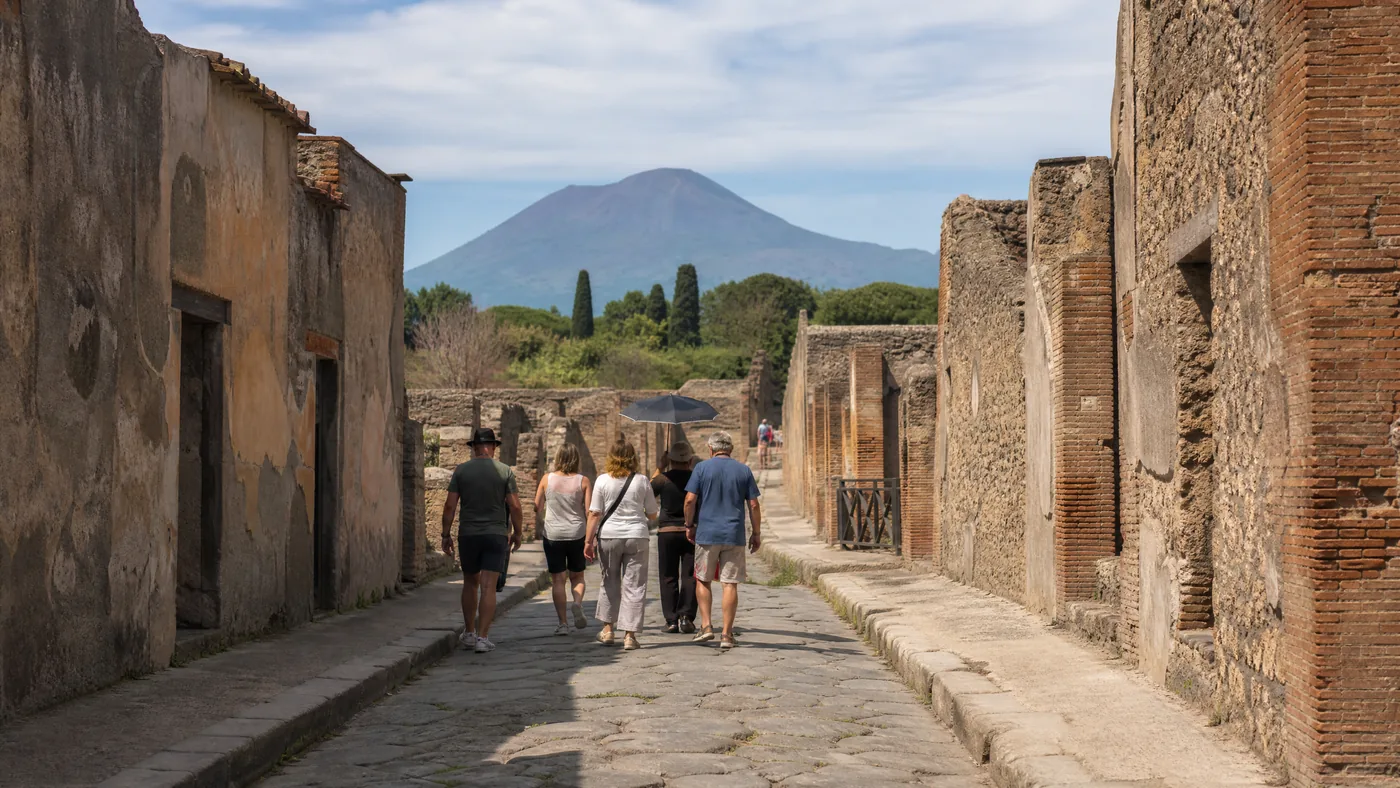
The story told on site: the small-group tour is led by an archaeologist, with a maximum of 15 people.
Check dates for the small-group tourWhich volcano destroyed Pompeii, and when?
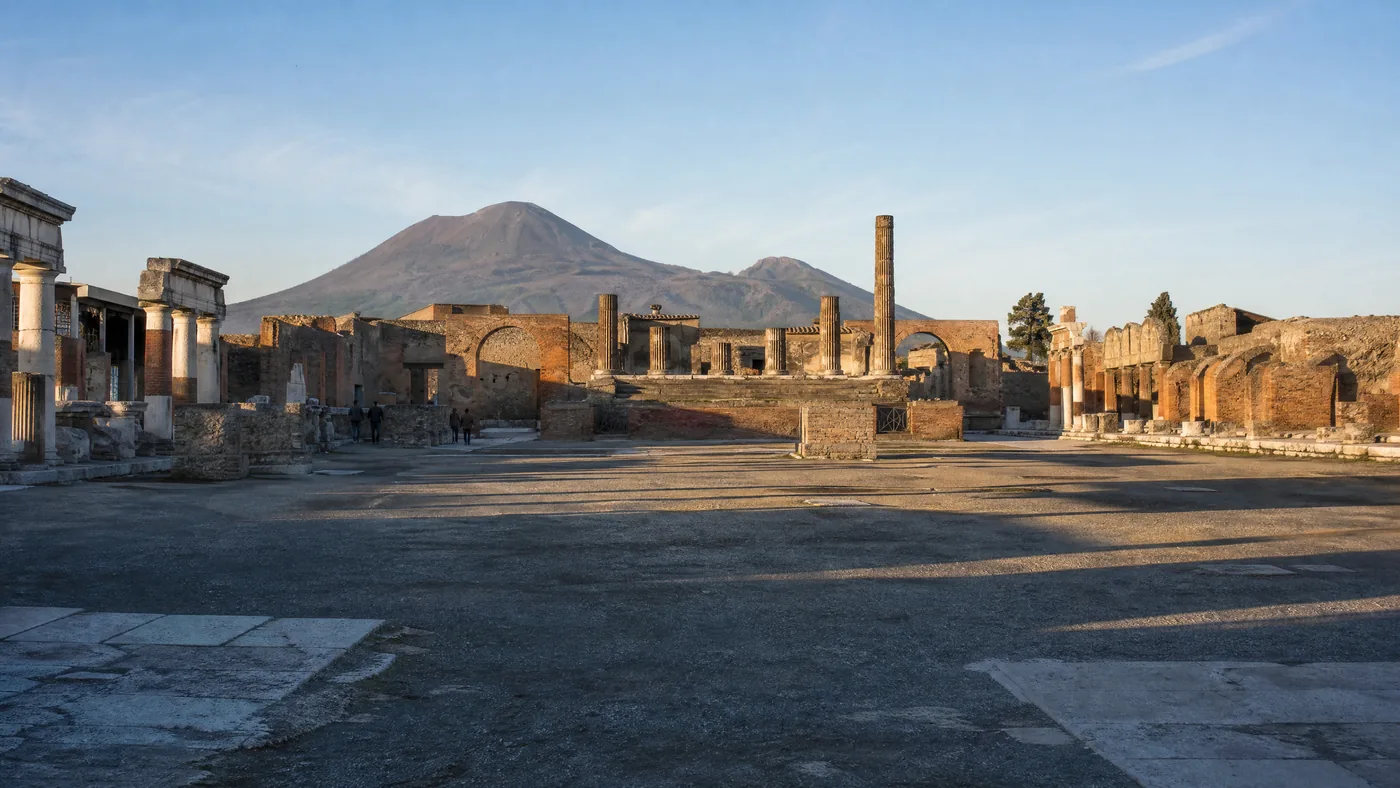
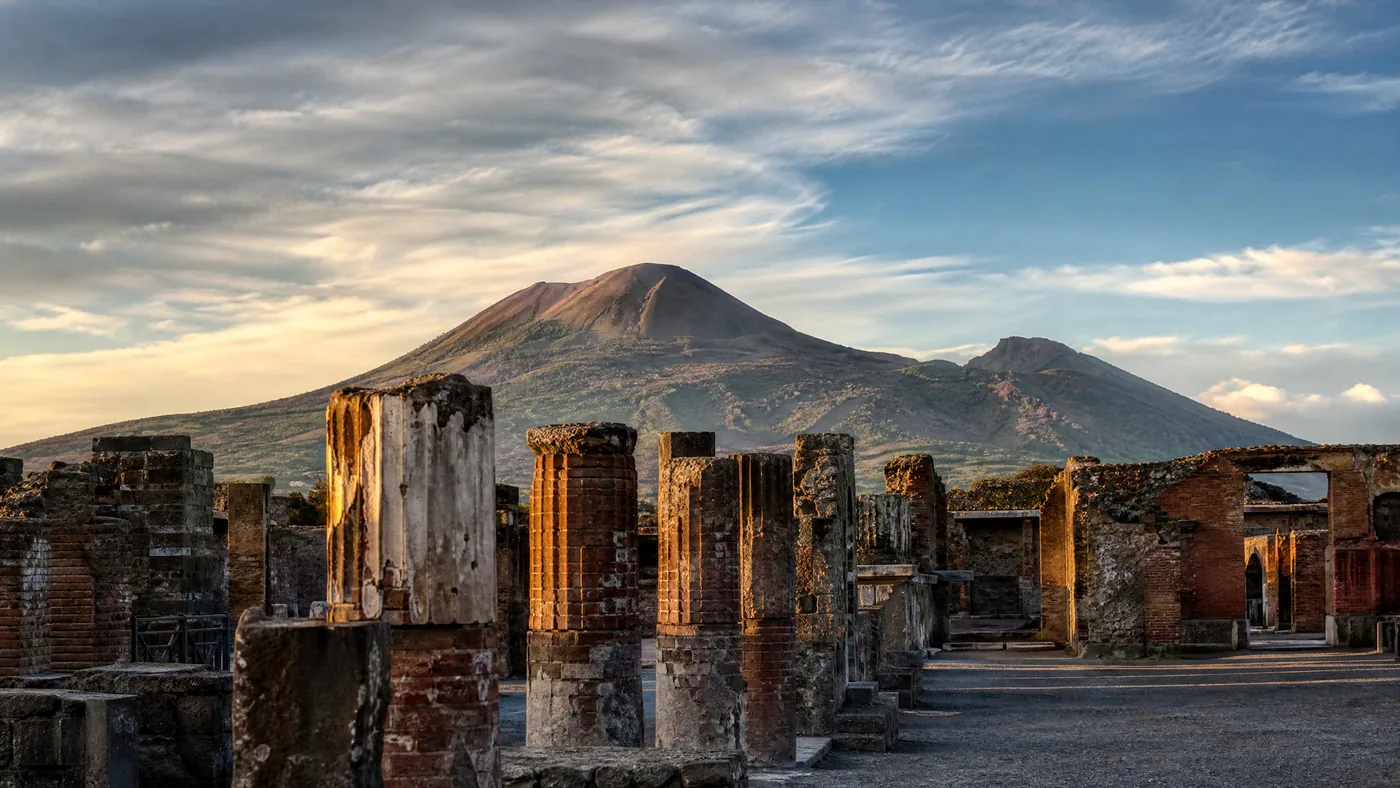
Vesuvius, in AD 79. The eruption lasted two days and buried the city under metres of ash and pumice.
The traditional date is 24 August, derived from Pliny the Younger’s letter. However, a charcoal inscription found in 2018 bears the date 17 October, and a 2022 study places the eruption on 24-25 October. Pliny the Younger described the eruption in his letters; Pliny the Elder, admiral of the Misenum fleet, died attempting a rescue.
With Pompeii, Herculaneum, Stabia and many nearby villas were buried under 4-6 metres of ash and pumice, according to English Wikipedia.
How many people died in Pompeii?
About 1,150 bodies have been found on the site. The first phase, a rain of pumice lasting about 18 hours, allowed most inhabitants to flee.
The sources we use do not give a total of victims or survivors: they say that most inhabitants managed to flee. Before the eruption, Pompeii had between 11,000 and 11,500 inhabitants, according to calculations based on housing; older estimates go up to 20,000. The city covered about 64-67 hectares.
Who discovered Pompeii?
The excavations began in 1748 under Charles of Bourbon, when it was not yet known that this was Pompeii. Herculaneum had been rediscovered in 1738.
Already after the eruption, survivors and looters dug in search of valuable objects, and a small settlement reoccupied the area until the 5th century. In 1863 the excavations passed to Giuseppe Fiorelli, who divided the city into regiones and insulae, regions and blocks that you still find on the Park’s pages. Fiorelli had plaster poured into the voids left by the bodies in the ash: thus the casts were born. Today a transparent resin is used.
Pompeii today: who manages the excavations and how many visitors arrive?
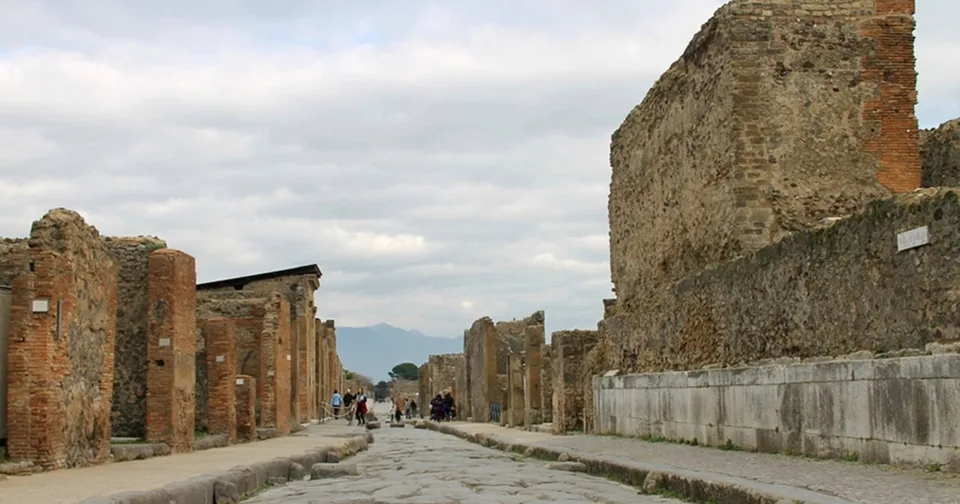
The excavations are managed by the Archaeological Park of Pompeii and since 1997 have been a UNESCO World Heritage Site, together with Herculaneum and Oplontis. In 2024 they recorded 4,069,377 visitors.
In 2024, the management announced a cap of 20,000 named tickets per day and time-band entries in summer. Today they are rules written in the regulations of 23 December 2025. Prices and rules are in the guide to Pompeii tickets.
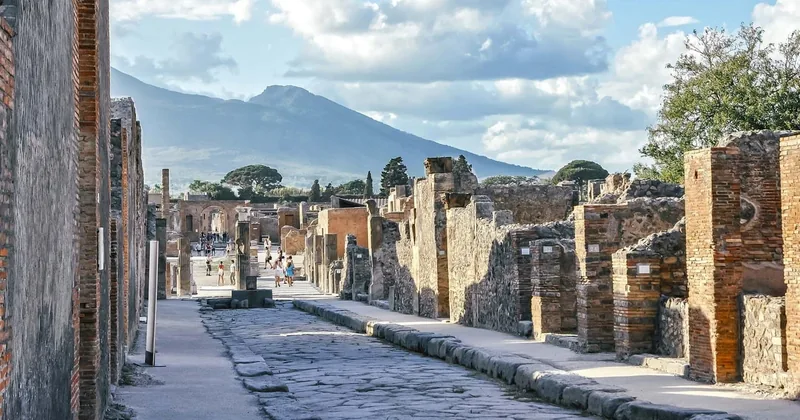
An official guide with archaeology training, maximum 15 people and the entrance ticket already booked.
Discover the small-group tour Tour detailsFrequently asked questions
Why are there so many phallic symbols in Pompeii?
The sources we use describe the finds, not their meaning. Wikipedia recalls a fresco of Priapus, god of fertility, covered in plaster in the early excavations, and a bronze cauldron with a winged phallus found in the Workshop of Verecundus, a textile shop.
Which city was destroyed along with Pompeii?
Herculaneum and Stabia, with many surrounding villas, according to Wikipedia in English. Today Herculaneum and Oplontis are part of the UNESCO site together with Pompeii.
Was Pompeii a rich city?
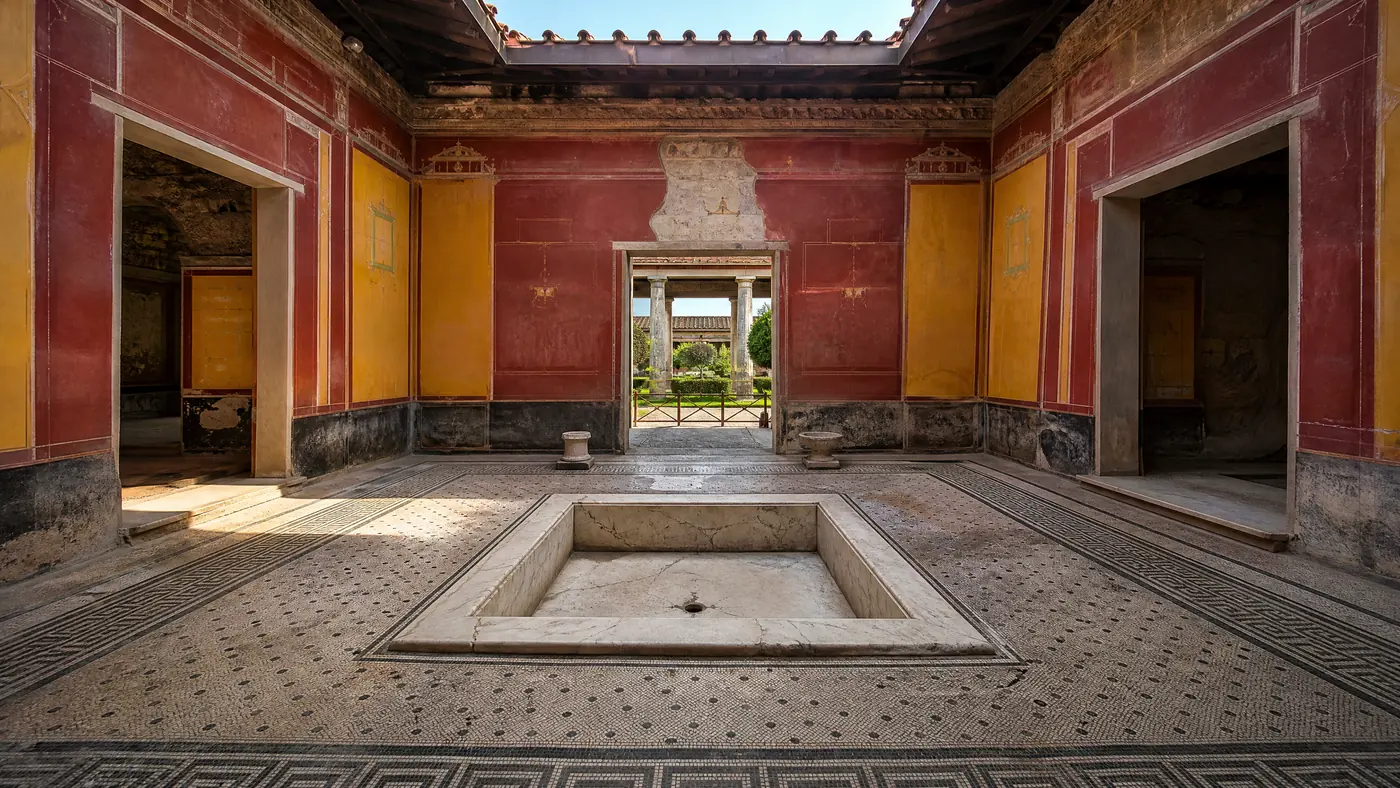
Wikipedia in English describes it as a prosperous city, with public buildings and richly decorated private houses. Around it there were many villas, including the Villa of the Mysteries and the Villa of Diomedes.
What are the casts of Pompeii?
Shapes obtained by Giuseppe Fiorelli by pouring plaster into the voids left by the bodies in the ash. Today a transparent resin is used; at the Large Palaestra there is a permanent exhibition on the casts.
Ready to book
Choose your visit
Free cancellation up to 24 hours before on every option. Prices are starting prices in USD and change with the season.
Small group tour with archaeologist
An archaeologist and a maximum of 15 people in the group
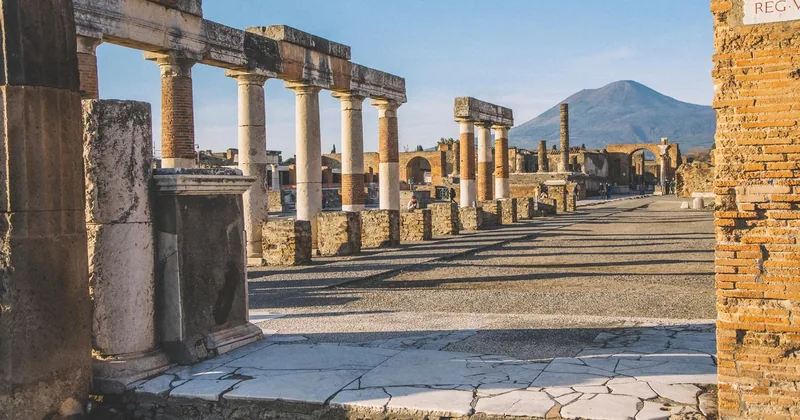
Guided tour with archaeologist and ticket
- Archaeologist and licensed guide
- Pompei Express ticket
- Headphones
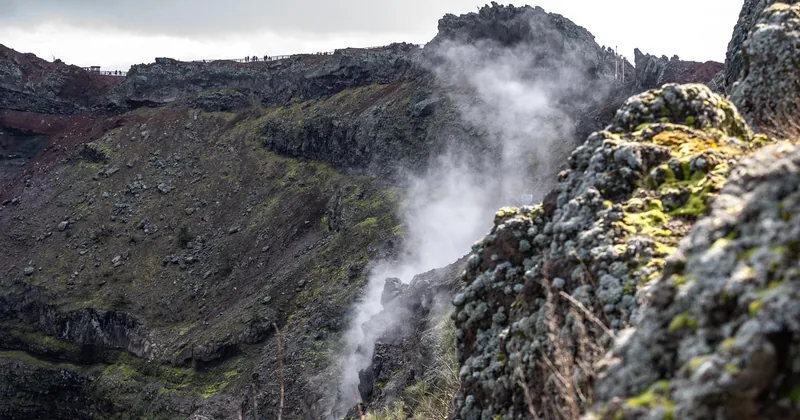
From Naples: Pompeii and Vesuvius in a day
Bus from Naples and ticket; Vesuvius and pizza in the full-day option